
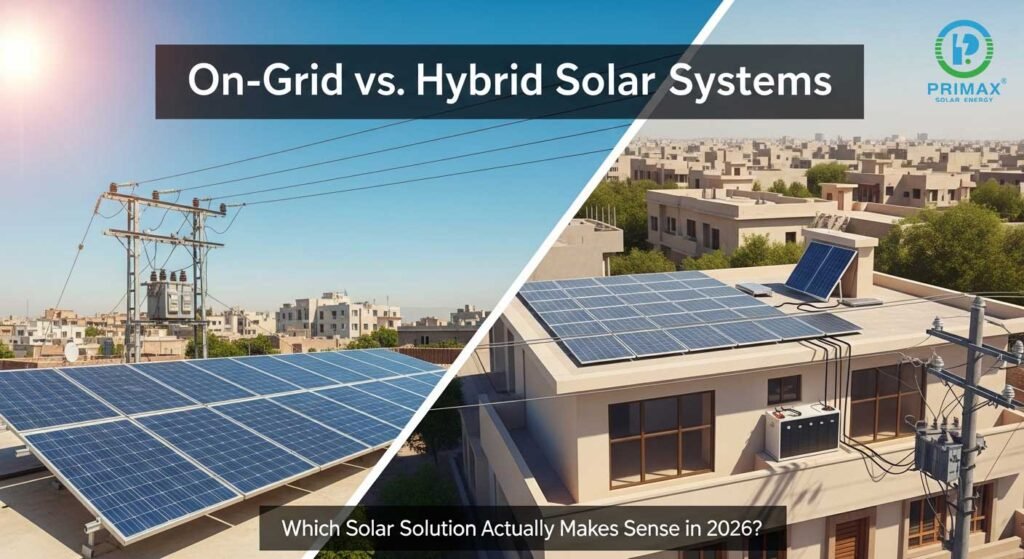
Pakistan’s solar market has changed dramatically over the past few years. Earlier, most people installed solar systems only to reduce electricity bills through net metering.
But today, rising electricity prices, load shedding concerns, and policy uncertainty have forced buyers to ask an important question:
Should you install an On-Grid system or a Hybrid Solar System in Pakistan?
This guide explains both options in simple terms so you can make the right decision for your home or business.
Understanding Solar Systems in Pakistan
Before comparing, let’s quickly understand how both systems work.
A solar system mainly depends on one core device — the solar inverter.
The inverter converts solar panel energy into usable electricity for your home or office.
The type of inverter you choose determines how your entire solar system performs.
What Is an On-Grid Solar System?
An On-Grid Solar System works directly with the utility grid.
How it works:
- Solar panels generate electricity during daytime
- Power runs your appliances
- Extra electricity is exported to the grid through net metering
- At night, electricity comes back from the grid
Advantages of On-Grid Systems
✅ Lower initial investment
✅ Faster payback through net metering
✅ Simple installation
✅ Suitable where electricity supply is stable
Limitations
❌ No backup during power outage
❌ System shuts down when grid fails
❌ Fully dependent on government policies
This is the biggest reason many users are reconsidering on-grid installations in 2026.
🔋 What Is a Hybrid Solar System?
A Hybrid Solar System combines solar panels, batteries, and grid electricity into one intelligent system using a hybrid inverter.
How it works:
- Solar powers your loads first
- Extra energy charges batteries
- Stored energy runs appliances during outages
- Grid acts as secondary support
In simple words, hybrid systems give you solar savings + backup power.
Why Hybrid Systems Are Growing Fast in Pakistan
Pakistan’s electricity situation has shifted consumer priorities.
Today, people want:
- Continuous electricity
- Protection from tariff increases
- Independence from grid failures
A hybrid inverter allows users to store solar energy instead of exporting everything to the grid.
Because of this, demand for hybrid systems is rapidly increasing across residential and commercial sectors.
On-Grid vs Hybrid Solar System Comparison
| Feature | On-Grid System | Hybrid Solar System |
|---|---|---|
| Backup During Load Shedding | ❌ No | ✅ Yes |
| Battery Support | ❌ Not Available | ✅ Available |
| Net Metering Dependency | ✅ High | ⚠️ Low |
| Future Expansion | ❌ Limited | ✅ Flexible |
| Energy Independence | ❌ Low | ✅ High |
| Initial Cost | ✅ Lower | ⚠️ Higher |
| Long-Term Security | ❌ Moderate | ✅ Strong |
Solar Inverter Price in Pakistan – Cost Difference
One major factor buyers consider is cost.
The solar inverter price in Pakistan varies depending on system type and capacity.
On-Grid Inverter:
- Lower upfront cost
- No battery expense
Hybrid Inverter:
- Slightly higher investment
- Battery-ready design
- Long-term flexibility
Although the hybrid inverter price in Pakistan is higher initially, many users prefer it because it eliminates blackout problems and protects future investment.
Which System Makes Sense for Pakistani Homes?
✅ On-Grid System Is Suitable If:
- Your area has stable electricity
- Net metering approval is available
- Backup power is not required
- Budget is limited
✅ Hybrid System Is Better If:
- Load shedding occurs frequently
- You want battery backup
- Electricity bills are very high
- You want future expansion
- Energy independence is your goal
For most urban households in 2026, hybrid systems are becoming the safer long-term choice.
🔎 Choosing the Best Solar Inverter in Pakistan
Selecting the right inverter is critical for system performance.
When comparing options from the top 10 solar inverters in Pakistan, buyers now look for:
- Battery compatibility
- High efficiency
- Smart monitoring apps
- Fast switching during outages
- Expandable capacity
Similarly, products listed among the top 10 hybrid inverter in Pakistan usually offer multi-source energy management and advanced protection features.
📈 Market Trend: Hybrid Is Becoming the New Standard
Installers across Pakistan report a clear shift:
➡️ Earlier demand: On-Grid Systems
➡️ Current demand: Hybrid Systems
Customers no longer install solar only for savings — they install it for power security.
As electricity costs continue rising, hybrid technology is expected to dominate future solar installations nationwide.
✅ Final Verdict: On-Grid or Hybrid?
If your goal is minimum upfront cost, an on-grid system may still work.
But if your goal is:
- Reliable electricity
- Backup during outages
- Protection from policy changes
- Long-term energy control
Then a hybrid inverter system clearly makes more sense in Pakistan today.
Conclusion
Solar energy in Pakistan is evolving from bill reduction toward complete energy management. Choosing between on-grid and hybrid systems is no longer just a technical decision it’s a strategic one.
Investing in the right solar inverter today ensures stability, savings, and peace of mind for years to come.